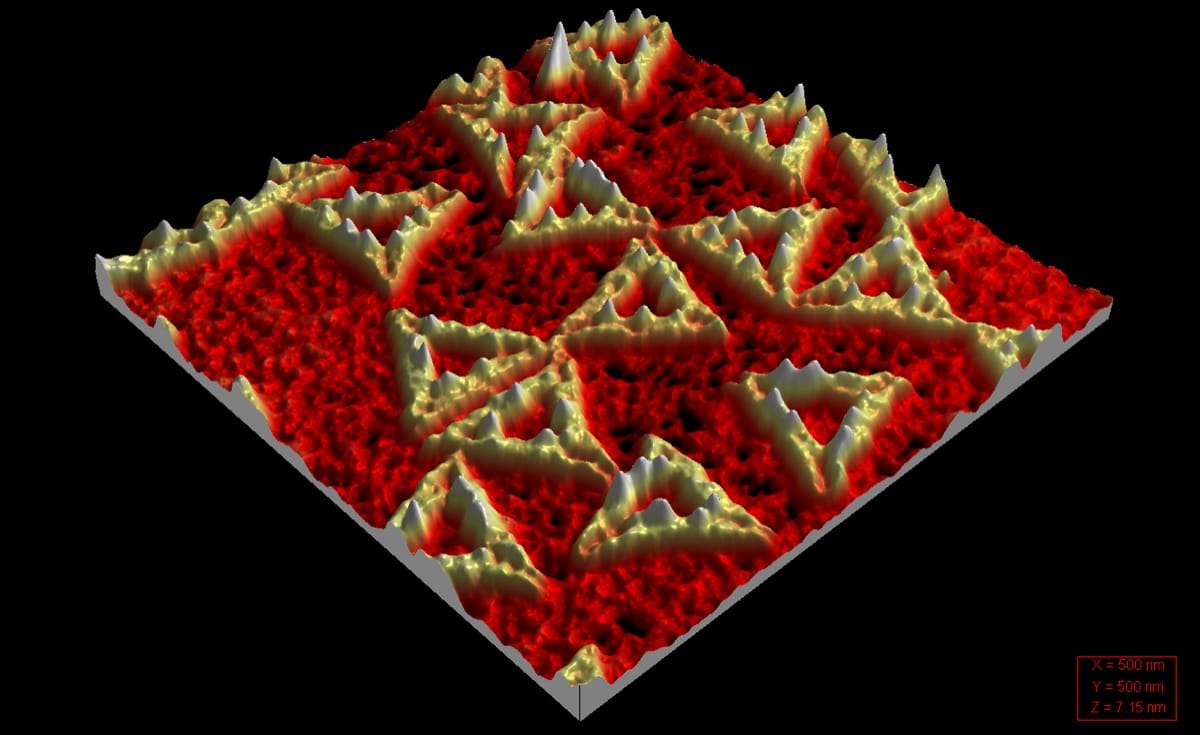
Image: Matthias A. Fenner via Wikimedia Commons (CC BY-SA 4.0)
Hansen CH, Lipstein M, Erlandson SC, et al. Discovering molecular modulators with nanoswitch screening. Science, 2026.
A screen built for three-body binding
Molecules that strengthen a protein–protein interaction are hard to find, because most screening methods measure one binding event at a time and cannot easily read out a three-way complex. This group built FIND (Functional Interaction-based Nanoswitch Discovery), which pairs DNA nanoswitches with next-generation sequencing so that very large encoded libraries can be selected directly on whether a compound induces or strengthens a protein pair.
The authors demonstrate FIND twice. From a nanobody library they found binders that stabilise the interaction between ACE2 and the SARS-CoV-2 receptor-binding domain. From a DNA-barcoded small-molecule library they found agonists of the nuclear receptor PPAR-gamma. Both runs show the method reading out cooperative, multi-body binding at a throughput that conventional assays struggle to reach.
Why it matters
Finding glues is a numbers game and mostly intractable unless you cheat to narrow the odds. Useful molecules are rare, and they only reveal themselves when both partners are present. Screening platforms that score ternary complex formation directly, rather than inferring it afterwards, make that search tractable but still a brute force approach. At MINIMUM bio we cheat by simplifying the problem by looking at one bait protein at a time and designing molecular glues that retain the “bait-binding-domain” of the potential molecular glues. Aided and abetted by our own Phagent platform built to analyse biopanning results against the entire human proteome. However, it is encouraging to see high-throughput approaches to stabilising molecular glue interactions published in a journal of this reach.
Partners and investors working on induced proximity are welcome to get in touch.